

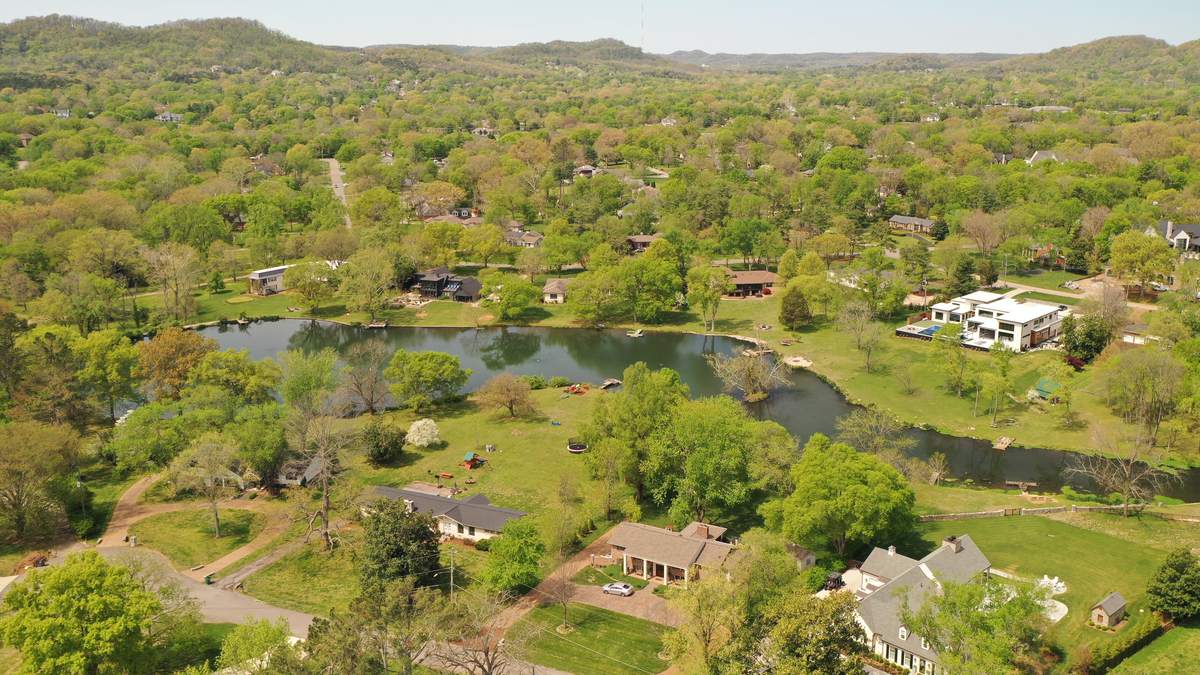
Before anyone drew a lot line, the land under Meadow Lake passed from a frontier grant through three generations of daughters, became a stone mansion with a spring-fed lake, and then waited on one thing: water. A 2018 article from the Brentwood Historic Commission bills Meadow Lake as “Brentwood’s Oldest Subdivision.” Here is the story behind that title.
Our main source is “Meadow Lake: Brentwood’s Oldest Subdivision”, written by Kathie Greaves of the Brentwood Historic Commission and published in the Spring 2018 City Update newsletter from the City of Brentwood, pages 4 and 5. We retell it in our own words, with a few details from the City of Brentwood history page. For the neighborhood as it is today, see our Meadow Lake Brentwood area guide.
A story of daughters: the Crockett grants
Greaves opens under the heading “A Story of Daughters,” and it fits. In 1780 and again in 1790, North Carolina granted James Crockett of Virginia two tracts of land. Together they take in much of present-day Meadow Lake, Iroquois Estates, Williamsburg Estates, McGavock Farms and Brentwood Country Club Estates. Even then the land had a past: the grant mentions an “old Indian town.”
Midway and the McGavocks
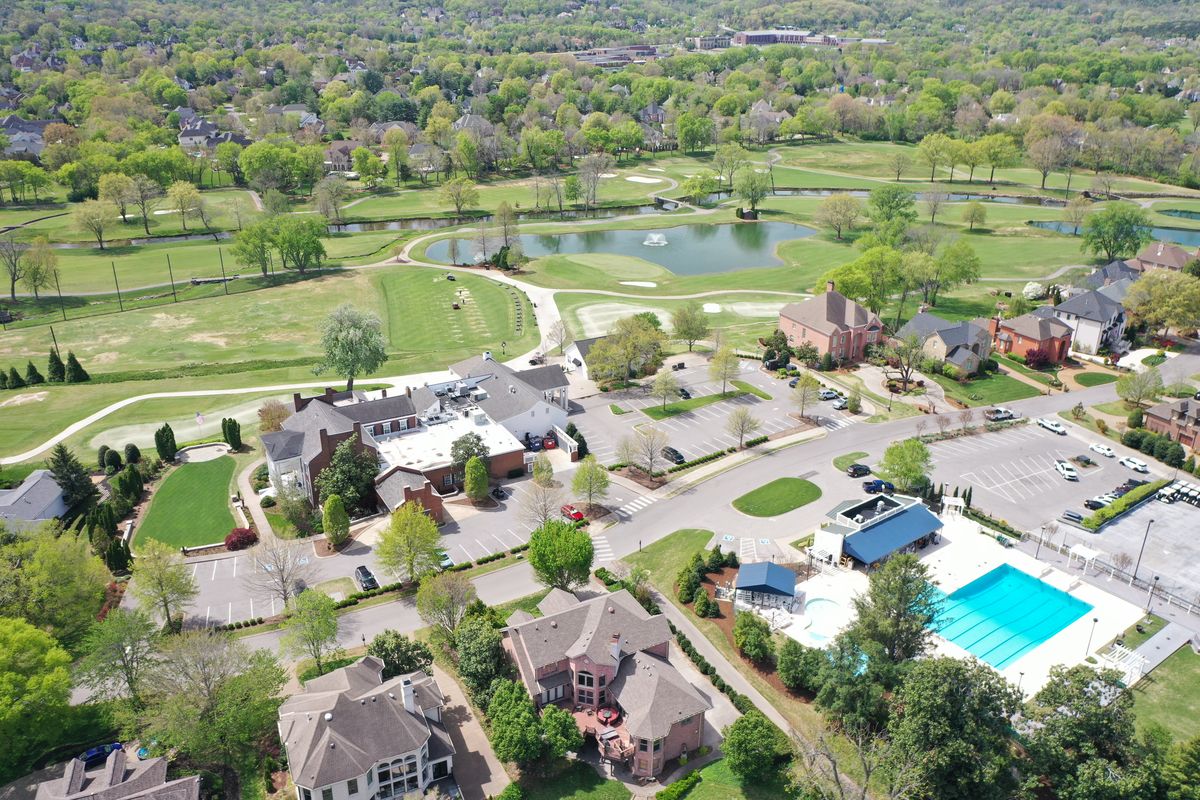
In 1818, Crockett passed the property to his daughter, Elizabeth, along with her three sons. She and her husband, Lysander McGavock, settled on it and built an elegant home called Midway. The McGavocks kept adding land until the farm topped 1,200 acres. According to the City of Brentwood, a post office called Good Springs once operated on the Midway plantation, on the road to Franklin. Midway still stands inside Brentwood Country Club, and our Brentwood Country Club guide covers the neighborhood around it.
Emily Hayes and Hayesland
The next daughter in the story is Emily McGavock. When she married Oliver Bliss Hayes Jr. in 1851, her share was the northern end of the Midway farm, the same ground that holds Iroquois, Meadow Lake and Williamsburg Estates today. In 1852 Emily and Oliver built their own residence there and named it Hayesland. Their daughter Elizabeth carried the line forward. She married Dr. William W. Martin and inherited the Hayesland property.
Boxwood Hall and a spring-fed lake
Around 1910, the Martins built a far larger stone house in the Colonial Revival style. It is said to have taken in the original, smaller Hayesland. In 1935, A.J. Dyer bought the property, restored it, and made improvements that included a spring-fed lake of eight acres. He also gave the mansion a new name: Boxwood Hall. According to the Historic Commission, Boxwood Hall remains a private home in Meadow Lake today. Out of respect for its owners, we do not share its location or photos.
The trolley stop that outlasted the line
In 1909 the Nashville-Franklin Interurban Railroad began running electric trolleys across the McGavock and Hayes land. The City of Brentwood’s history says the interurban made the commute to Nashville easier. Buses eventually replaced the trolley, and the last interurban run came in 1941. Yet the stone building known as the Hayesland, or “Midway,” station still sits in Meadow Lake, and the Historic Commission says it is the only station left from the line.
Eddy Arnold and the water that built a suburb
By 1960, Brentwood had roughly 1,065 residents and no shortage of open land. What it lacked was a good water supply. Brentwood Estates was the first subdivision to rely on wells, and those wells soon fell short. The fix came from the old Hayes property. The Arnold Development Company, led by principal Eddy Arnold, purchased Hayesland along with the land around it. Next, Arnold joined several others to form the Brentwood Water Company, drawing on lake water from the former Hayesland property.
In Greaves’s words, that water supply “made development possible.”
1961: Iroquois opens and the neighborhood fills in
The article points to a 1961 story in The Tennessean announcing a grand opening for 70 lots in Iroquois Estates. From there, Iroquois grew alongside Meadow Lake Estates and Williamsburg Estates, and by the time the article ran in 2018 the area held more than 317 homes. The City of Brentwood itself did not incorporate until 1969, when it had a population of 3,378. These streets were taking shape before there was a city to hold them.
The Arnold Site: a village older than the grants
The deepest layer of this history surfaced in 1965. With Meadow Lake under development, a large Mississippian village and cemetery came to light and was partly excavated. It was named for the landowner, Eddy Arnold: the Arnold Site.
It was not the first record. Besides the “old Indian town” in Crockett’s grant, Harvard’s Peabody Museum looked into the Emily Hayes farm in 1879 and recorded old earthworks enclosing 30 to 40 acres beside the Little Harpeth River, along with stone box graves and a large burial mound. That mound, the article says, points to a first settlement earlier than 1300 A.D. Today a historical marker identifies the site, and the City of Brentwood’s history page lists the Meadowlake subdivision among the places Mississippian people once lived.
Meadow Lake today
The neighborhood’s lake is private, and only the homes that border it have access. On its streets, original-era houses and newer custom homes stand side by side. See how it fits into the wider city in our Brentwood TN area guide. Weighing Williamson County more broadly? Read our Brentwood vs Franklin comparison.
To dig further, the article points readers to T. Vance Little’s 1999 book When Cotton Was King On Concord Road: a History of Brentwood Subdivisions, kept in the Brentwood Room at the John P. Holt Brentwood Library.
Curious about living in Meadow Lake?
Nicole Rodgers, Realtor®, and the Live Real Lux Group of Benchmark Realty can walk you through Meadow Lake and Brentwood’s other established subdivisions.
Or call (615) 660-2674.
Meadow Lake history FAQ
Is Meadow Lake the oldest subdivision in Brentwood?
That is how the Brentwood Historic Commission describes it. Kathie Greaves titled her Spring 2018 City Update article “Meadow Lake: Brentwood’s Oldest Subdivision,” and it points to a 1961 grand opening for 70 lots in Iroquois Estates.
What is Boxwood Hall?
The stone Colonial Revival house that grew out of Hayesland, the 1852 Hayes home. A.J. Dyer bought it in 1935 and named it. It is a private residence today.
What was Eddy Arnold’s role in Meadow Lake?
His Arnold Development Company bought Hayesland and the land around it, and he and several others formed the Brentwood Water Company, using lake water from the old Hayesland property. That supply made development possible.
What is the Arnold Site?
A Mississippian village and cemetery uncovered in 1965 as Meadow Lake was developed, then partly excavated. It carries the name of the landowner, Eddy Arnold, and a historical marker now identifies the site.
Can anyone use the lake in Meadow Lake?
No. It is a private lake, open only to the homes that border it.
Sources: Kathie Greaves, Brentwood Historic Commission, “Meadow Lake: Brentwood’s Oldest Subdivision”, City Update, Spring 2018, City of Brentwood, pages 4 and 5 (accessed November 23, 2026). Good Springs post office, the interurban commute, the 1969 incorporation and Mississippian settlement locations from the City of Brentwood history page (accessed November 23, 2026). Photos by Live Real Lux.